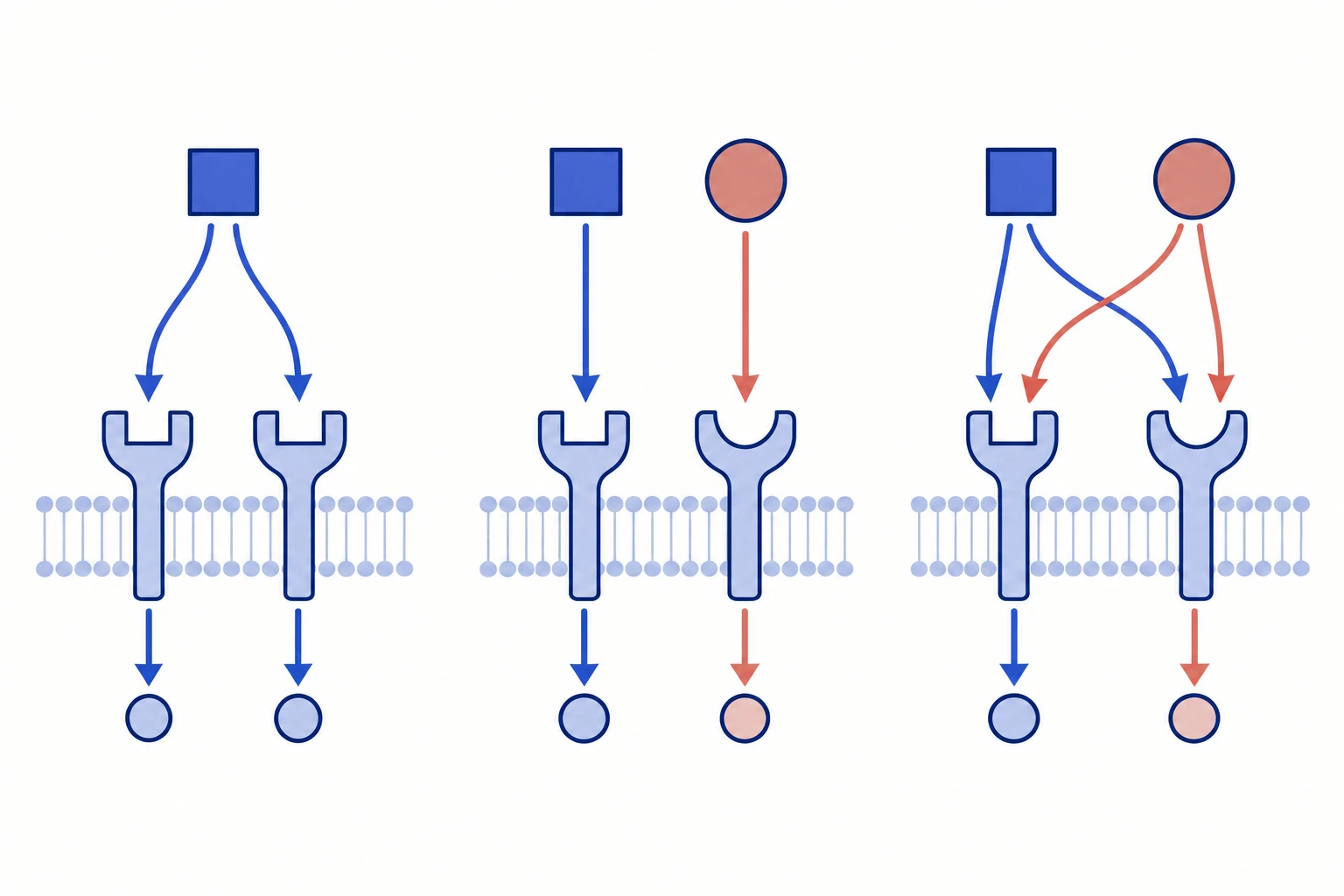
Cellular signaling
Cells communicate by releasing molecules such as hormones, growth factors and cytokines. Receptors detect these signals and activate networks of proteins inside the cell, connecting changes in the environment to a cellular response.
These networks are interconnected, and apparently similar cells can respond differently to the same signal. We study how signaling dynamics, cellular variability and pathway architecture work together, asking how cells interpret complex signals reliably and what this means for coordinated biological function.
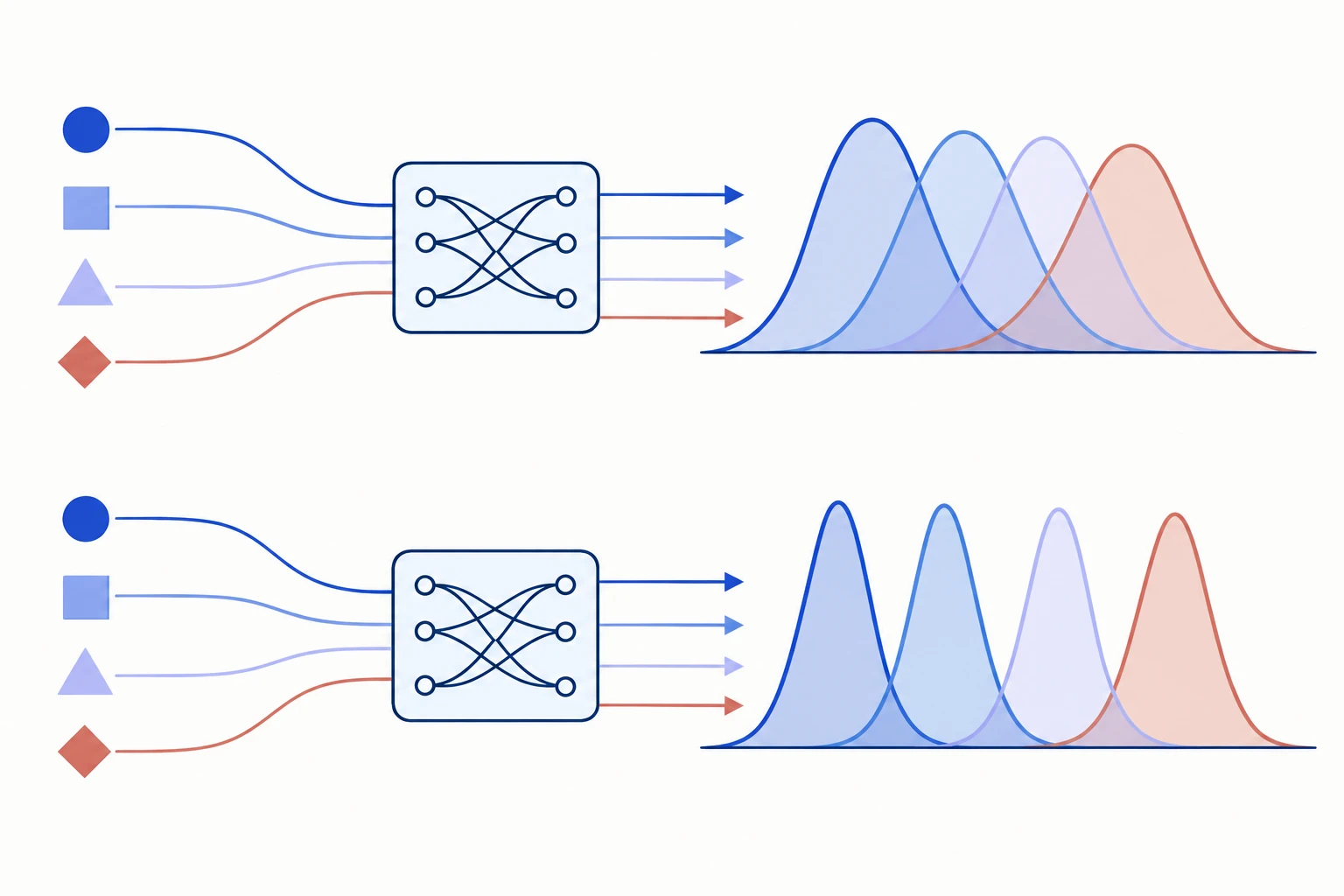
Information theory
We view a signaling pathway as a communication channel: a stimulus is the input, and a cellular response is the output. Because the same input can produce a range of responses, interpreting the signal involves uncertainty.
Information theory gives us tools to quantify that uncertainty. Shannon information capacity measures how much information the channel can transmit, while Fisher information describes how sensitively response distributions change with the input. We investigate how signaling dynamics, network connections and cellular states affect the ability to distinguish stimuli, and how these limits help explain the organization of signaling systems.
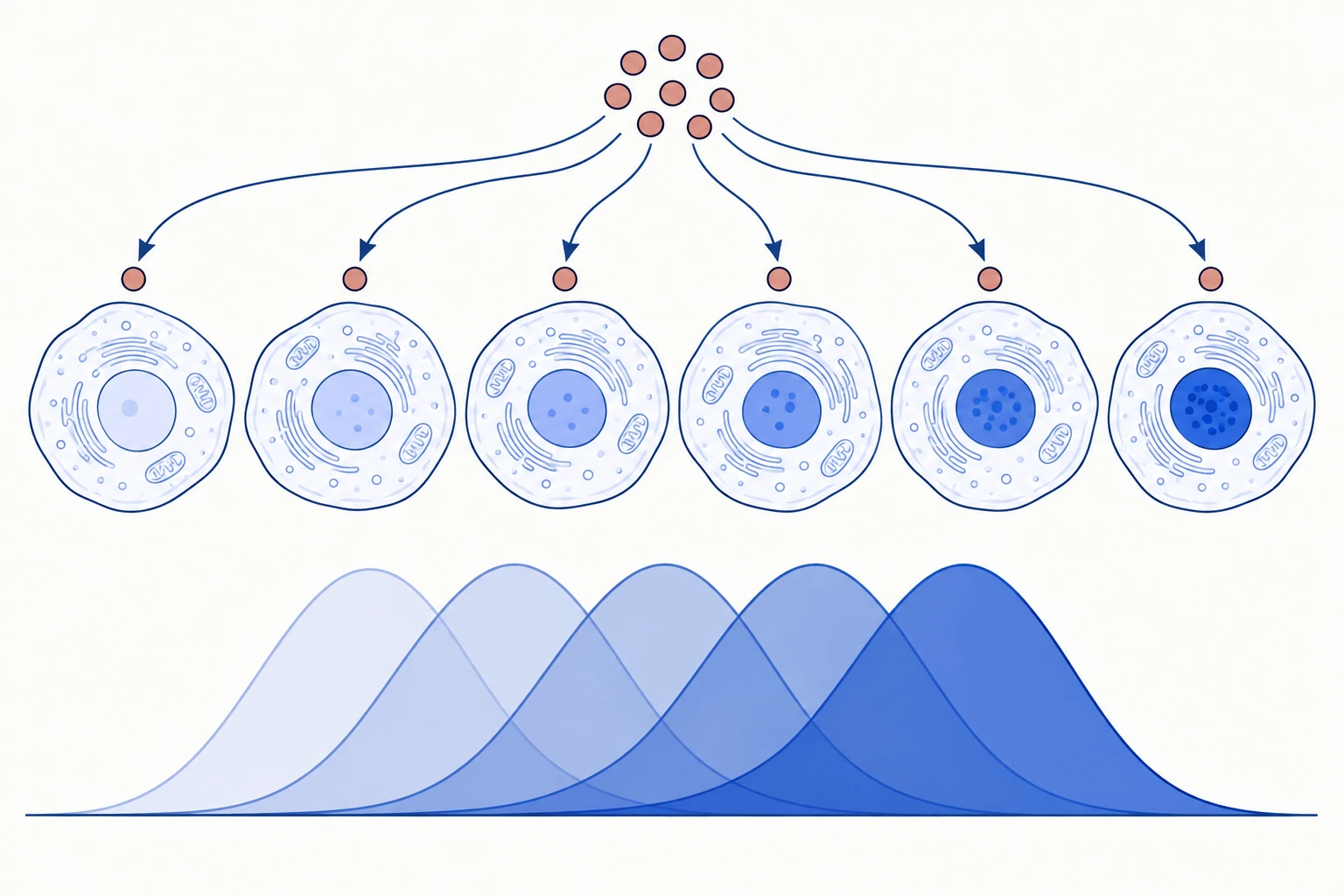
Cell-to-cell variability
Genetically similar cells exposed to the same stimulus can show very different responses. This variability can reflect random fluctuations in molecular reactions, but also differences in cellular states, such as the amounts or activity of signaling components.
Distinguishing these possibilities matters: a broad spread of responses across a population does not, by itself, tell us how precisely each cell senses its environment. We combine quantitative experiments and mathematical analysis to understand what drives heterogeneous responses and how reliable signaling can emerge at the level of individual cells and populations.
Cross-wired signaling
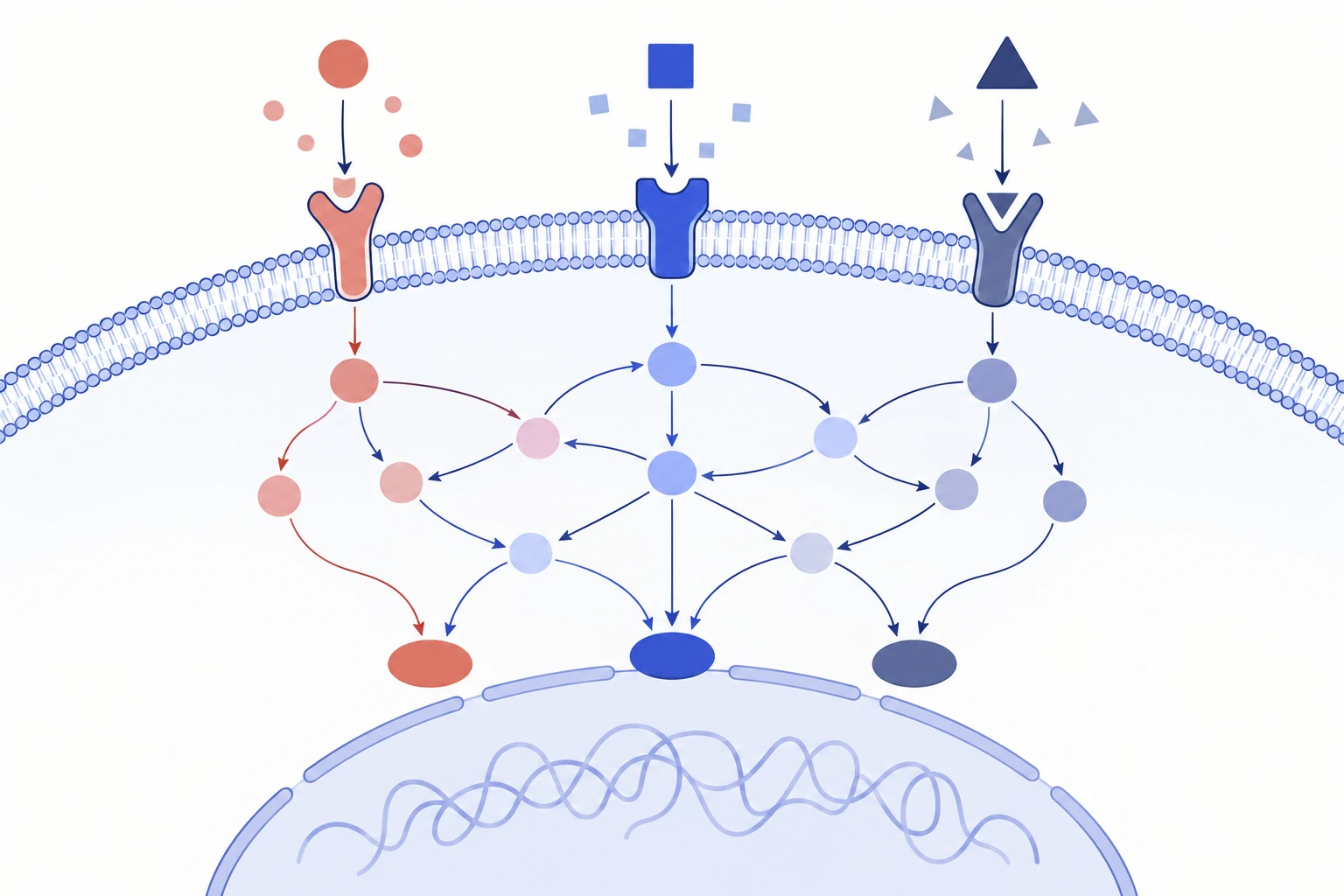
Cellular signaling is rarely organized into fully separate pathways. A single ligand can activate several effectors, and a single effector can respond to several ligands. This shared use of signaling components creates networks with overlapping inputs and outputs.
We ask why this architecture is so widespread, how it arose during evolution, and what its advantages and limitations are. In particular, we study how the overlap between pathways affects information transfer: when can a cell still distinguish signals, and when do shared components constrain the range of responses it can resolve?